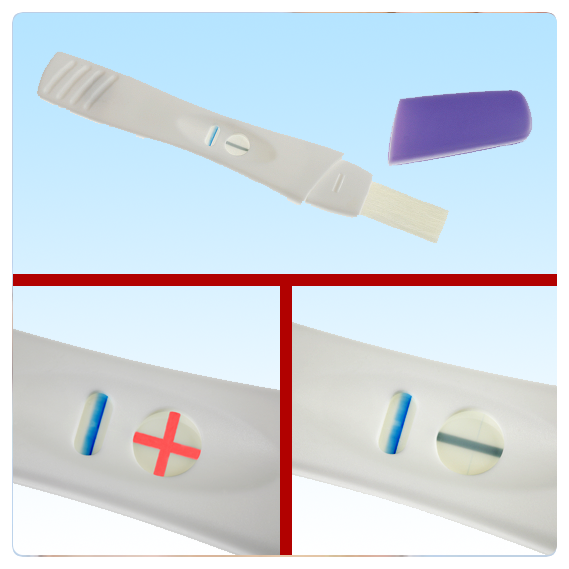
You can buy a pregnancy test at the drugstore. Follow the instructions on the paper insert inside the box. Most will ask you to pee on the strip or dip the strip in urine (in a cup), wait the stated amount of time, and then look for the colored lines, symbols, or word that will tell you if you are pregnant.
Remember, if you have unprotected sex today, you won’t be able to find out if you are pregnant for a few weeks. Get on some super-effective birth control like an IUD or implant, and you can reduce your worries about pregnancy until you are ready.
Blood tests are conducted at a clinic. They can tell you if you are pregnant and how far along you are. Remember, if you have unprotected sex today, you won’t be able to find out if you are pregnant for a few weeks. Get on some super–effective birth control like an IUD or implant, and you can reduce your worries about pregnancy until you are ready.

There are many types of pills to choose from. The pills have hormones that stop ovulation. Taken every day at the same time, they are very effective at preventing a pregnancy. If you miss a day, take the pill as soon as possible, plus the pill for that day. But if you miss more than two, start a new pack. Always use a backup method, like the condom, if you forget to take a pill.
Use it in combination with your favorite condom and stay clear of STIs as well.
Did You Know?
There are many types of pills to choose from. The pills have hormones that stop ovulation. Taken every day at the same time, they are very effective at preventing a pregnancy. If you miss a day, take the pill as soon as possible, plus the pill for that day. But if you miss more than two, start a new pack. Always use a backup method, like the condom, if you forget to take a pill.
Use it in combination with your favorite condom and stay clear of STIs as well.
The Dependent
Woman: I thought you were bringing a condom.
Man: This is the responsibility of both of us. You need to bring your condoms as much as I need to bring mine.
The Pleasure Seeker
Man: Look I ain’t putting that thing on my dick baby. I can’t feel nothing with that thing on. Nope, just ain’t going to do it.
Woman: Being protected turns ME on! We can try an ultra-sensitive or ultra-thin type of condom to keep sensation high. Beside if you don’t use one, you won’t feel a thing because I won’t have sex.
The Pull-outer
Man: I will just pull out before I cum.
Woman: It’s hard to time this perfectly, especially if we’re both excited. The pre-cum can get me pregnant or transmit STIs.
The Averter
Man: Birth control is your responsibility, not mine.
Woman: Sex involves the two of us, from the protection to the pleasure. So man up and get one.
The Confident
Woman: We don’t need a condom, I’m on birth control.
Man: Babies are not the only thing we need to worry about.
The Non-Starter
Man: Yo listen. We did it before without one. Come on baby!
Woman: I know we have, and it’s a risk we took. It’s never too late to start being safe.
The Lover
Man: I love you, I thought you loved me too.
Woman: I do love you. And If you love me, you’ll love me feeling safe and protected. If you love me, you won’t make me prove it by doing something I don’t want to.
The Trustworthy
Woman: You know me, you know that I am not sleeping around.
Man: I hate them as much as you do. Let’s get tested and I’ll throw the box away.
The Loner
Man: But you are already using birth control. We don’t need a condom.
Woman: I use birth control as a way to prevent pregnancy. But condoms protect from STIs. Until we both get tested we don’t really know if we have an STI. So we need double protection.
The Gambler
Man: Baby listen. Just this once. I promise nothing is going to happen. The odds are like a billion to one. Just give me a hug.
Woman: I could get pregnant any time I have sex. So if you don’t want to use a condom now, there won’t be a next time.
The Giant
Man: I’m too big to fit in a condom.
Woman: First, the condom is supposed to be tight. Also there are larger sizes for every man. The standard size fits most men.
The Guilt Tripper
Man: Yo it’s like what? You don’t trust me. I trust you. Why don’t you trust me? That ain’t cool. Come on now. You my girl right?
Woman: Wearing a condom isn’t about trust, it’s about our health. Some STIs have no symptoms and may be spread without you even knowing you have it.
The Jealous
Woman: Why are you pulling a condom? Are you cheating on me?
Man: I am not cheating on you and I know you are not cheating on me, but we have not gotten tested in a while and besides I can’t have a baby right now.
The Denier
Man: Yo… for real for real… I ain’t wearing no glove… so.
Woman: Okay. For real for real there’s no way you can get me to have unprotected sex. No glove no love.
The Idler
Man: But I don’t have one on me. I have to go all the way to the store to get it.
Woman: We could still do something else instead. I bet you the next time you won’t forget to get one though.
The Show Stopper
Man: Stopping to put on a condom ruins the moment.
Woman: Not if I do it. I know a special way to put it on that you will love.
The shot is simple—given once every 3 months, it is highly effective in preventing pregnancy. It contains hormones that stop ovulation and stop sperm from moving toward an egg.
Use it in combination with your favorite condom and stay clear of STIs as well.
Did You Know?
One simple shot carries a big punch. The shot takes just a few minutes for 3 whole months of protection. It’s that easy!
If you don’t have easy access to a clinic, consider another method that lasts longer.
This is a small, flexible ring you insert by yourself into your vagina. Use one for 3 weeks, take it out, and be ring-free for 1 week. The ring works by giving off hormones to stop ovulation.
Use it in combination with your favorite condom and stay clear of STIs as well.
Did You Know?
The ring works just like the pill, but you don’t have to remember to use it every day.
If the ring falls out, just wash it under cool water and put it back in. But make sure to do so within 3 hours! If it’s out for more than 3 hours, insert it but use a backup method like a condom for the rest of the month.
Afraid of forgetting to put a new ring in? We can help. Select Don’t Forget below.
The patch is a small, beige square you stick on your skin each week. It releases a hormone that stops ovulation. You can stick the patch a lot of places on your body for privacy—upper arm, butt, stomach—just not your breasts!
Use it in combination with your favorite condom and stay clear of STIs as well.
Did You Know?
If the patch peels off, put a new one on. Always ask for a replacement patch prescription, and have an extra one on hand.
If the patch falls off for more than one day, put a new one on and use a backup birth control method.
If you think you might forget to put a new patch on, we can help. Select Don’t Forget below.
This T-shaped device is inserted in your uterus by a doctor or nurse. It stops sperm that is moving toward an egg dead in its tracks! Some IUDs have hormones to stop you from ovulating. It’s got you covered for 3–10 years depending on the type of IUD.
Use it in combination with your favorite condom and stay clear of STIs as well.
Did You Know?
IUDs are one of the most effective forms of birth control. Get one, and forget about it! Can’t see it, can’t help but love it!
A UTI occurs when bacteria enter and infect the urinary tract (the body’s drainage for removing urine). UTIs can affect several parts of the urinary tract, but the most common type of UTI is a bladder infection (also called cystitis).
You may experience pain or burning while urinating, frequent urination, the need to urinate even when your bladder is empty, low fever, cloudy or bloody urine, and/or pressure or cramping in the groin or lower abdomen.
Physical exam and/or urine test.
Antibiotics. You will also need to drink plenty of water to help clear the bacteria from your body.
If you don’t take medicine for a UTI, the UTI can hurt other parts of your body such as your kidneys.
Urinate before and after sexual activity and always wipe from front to back after using the toilet. Stay well-hydrated and urinate regularly, take showers instead of baths, and avoid using vaginal douches and minimize use of sprays or powders in the genital area.
Yeast is always present in and on the body, but in small amounts. A yeast infection occurs when there is an overgrowth of the normal yeast in the vagina. This is a common infection.
Your genitals may itch or burn, and you may see “cottage cheese-like” vaginal discharge. Your genitals may look red and swollen.
A pelvic exam and testing of the discharge to look for overgrowth of fungus.
Antifungal creams, ointments, or suppositories inserted in the vagina, or oral tablets.
An untreated yeast infection can be transmitted to other partners. An untreated infection can also cause discomfort. It can cause vulvovaginitis, an inflammation or infection of the vulva or vagina.
Keep your vulva clean but avoid using strong soaps and perfumes in your genitals. Clean your genitals very well after using the toilet, wiping from front to back. Do not use vaginal douches. Wear breathable, cotton underwear, and avoid tight-fitting clothes in the groin area. Change out of wet clothes right away.
Bacterial vaginosis is not an STI—it is not caused by external bacteria, viruses, or parasites. It is an overgrowth of bacteria in the vagina. It happens when the normal balance of bacteria in the vagina changes. This imbalance may be caused by douching, using scented soaps or sprays, and having multiple sexual partners. Hormonal changes during pregnancy can also alter the balance of vaginal bacteria.
Many women with BV do not have symptoms. Some may notice white or gray vaginal discharge, fishy odor, pain, itching, or burning in the vagina.
Vaginal swab.
Antibiotics. It can come back even after treatment.
If you are sexually active, BV may increase your chance of getting infected with an STI. If you are pregnant, it can cause early or preterm birth.
Limit your number of sex partners. Do not use vaginal douches. Wear breathable, cotton underwear. Use latex, polyurethane, or polyisoprene condoms EVERY time you have sex. In some cases, semen may upset the balance of normal vaginal bacteria, increasing your risk for getting BV. If you think this is the case for you, consider using a condom.
Hepatitis B, or Hep B, is a viral infection that causes inflammation of the liver. You get Hep B from contact with blood, semen, vaginal fluid, or other body fluids from an infected person. Hep B can be treated and managed but not cured.
Many people with hepatitis do not have symptoms and do not know they are infected. Symptoms can include fever, fatigue, loss of appetite, nausea, vomiting, abdominal pain, dark urine, grey-colored stools, joint pain, and jaundice.
Blood test.
Depending on the type of Hep B infection you have, it may either resolve on its own or require treatment.
A person with untreated Hep B may develop cirrhosis of the liver and/or liver cancer.
Abstinence is the only way to prevent it 100%. Communicate with your partner before having sex to know if they are infected. Use a latex, polyurethane, or polyisoprene condom EVERY time you have sex. Get a Hepatitis B vaccine before becoming sexually active. Babies have been vaccinated at birth since 1991, so find out if you are already vaccinated.
Human immunodeficiency virus, or HIV, is a viral infection. You can get HIV through unprotected vaginal, anal, and oral sex, and through needle sharing. HIV infections can be treated and managed but not cured.
There are several stages of HIV. The first stage includes swollen glands in the throat, armpit, or groin, slight fever, headaches, fatigue, and muscle aches. In the later stages, the immune system is weakened, which can make the person vulnerable to serious infections, weight loss, and lymph node swelling.
Some people may develop brief, flu-like symptoms soon after infection. However, it may take up to 10 years to develop later-stage symptoms.
Cheek swab or blood test.
There is no cure. There are treatments to keep the virus under control and prevent the development of other infections.
Untreated HIV leads to AIDS (acquired immunodeficiency syndrome), the most advanced stage of HIV, in which the immune system gets seriously compromised.
Abstinence is the only way to prevent it 100%. Communicate with your partner before having sex to know if they are infected. Use a latex, polyurethane, or polyisoprene condom EVERY time you have sex to reduce your chance of getting infected.
People at very high risk for HIV may decide to take PrEP (pre-exposure prophylaxis) medications (pills or injections) when they are not infected to reduce the risk of a future infection. If a person is not taking PrEP and believes they may have been exposed to HIV, they may decide to take PEP (post-exposure prophylaxis), which is an HIV-preventing medication that must be started within 72 hours of the possible exposure.
Oral and genital herpes are viral infections. You can get herpes through vaginal, anal, and oral sex, and through direct contact with a herpes sore. Even when using a condom, herpes can be contracted through skin-to-skin contact with infected areas not covered by the condom. Herpes is very common among teens. If you touch the fluid from a herpes sore, you can spread the infection to any other body part you touch. Herpes can be treated and managed with antiretroviral medications but not cured.
Some people who have genital or oral herpes do not have symptoms. Genital herpes symptoms include sores on the vagina, penis, anus, buttocks, cervix, and mouth, with tingling, burning, itching, or pain. Herpes sores bleed easily and can increase your risk for infection with other STIs like HIV. Oral herpes symptoms include blisters or cold sores around the lips or mouth.
Genital and oral herpes are caused by related strains of the same virus. It is possible for the oral strain to infect the genitals and for the genital strain to infect the lips or mouth.
Test performed on material from a genital sore and/or a blood test.
The virus hides in nerve endings, and outbreaks may come back from time to time. It may be passed to an unborn baby during pregnancy and birth.
Abstinence is the only way to prevent it 100%. Communicate with your partner before having sex to know if they are infected. Latex, polyurethane, or polyisoprene condoms can protect you only if they cover the sore, but sores can appear anywhere on the body not covered by a condom. Avoid having sex during an outbreak.
Human papillomavirus, or HPV, is a big family of viruses. Some strains may cause genital warts, and others may cause cancer. You can get HPV through unprotected vaginal, anal, and oral sex. Even when using a condom, HPV can be contracted through skin-to-skin contact with infected areas not covered by the condom. It is the most common viral STI among teens. HPV can be treated and managed but not cured.
Most women may not have any symptoms, and some HPV viruses can clear out on their own. Some types of HPV produce warts (moist, pink growths around the anus or genitals). Other types of HPV can cause cancer of the cervix, vulva, vagina, anus, penis, and throat.
A health care provider uses a brush to take a cervical sample during a pelvic exam. The sample is usually taken at the same time as a Pap smear, which tests for cervical cancer.
There is no cure. Some warts can be removed. Cervical cancer can also be treated, but there is no guarantee that the person will be cured of cancer.
Abstinence is the only way to prevent it 100%. Communicate with your partner before having sex to know if they are infected. Use a latex, polyurethane, or polyisoprene condom EVERY time you have sex to reduce your chance of getting infected.
Get the HPV vaccine. The vaccine is given in 3 doses and helps prevent most cases of HPV that lead to cervical cancer. Even with the vaccine, it is essential to be tested for HPV and to get Pap smears to detect cervical cancer. Avoid sex until all symptoms have gone away after treatment. It is important to follow your health care provider’s instructions carefully during treatment.
Abstinence is the only way to prevent it 100%. Get the HPV vaccine before you become sexually active and always use a latex, polyurethane, or polyisoprene condom during sex to reduce your chance of getting infected. The vaccine is given in 3 doses and helps prevent most cases of HPV that lead to cervical cancer. Routine Pap smears help prevent cervical cancer.
Syphilis is a bacterial infection. You can get syphilis from direct contact with sores (caused by syphilis) on an infected person during vaginal, anal, and oral sex. Syphilis is curable, especially in its early stages. Damage to the body caused by syphilis in its later stages cannot be reversed.
During the primary stage of syphilis, you may feel (often) painless sores lasting 3 to 6 weeks. Sores can appear anywhere on the body, but usually on your vulva or penis. During the secondary stage, skin rashes can develop on the body, including your hands and feet. You may also have sores in the vagina or anus, a sore throat, weight loss, headaches, and muscle pains. During the tertiary stage, syphilis can damage the nervous system, heart, and brain. It is possible to be infected with syphilis for many years with no symptoms. This is called the latent stage and happens before the tertiary stage.
Blood test.
Antibiotics. You and your partner(s) must be treated to be cured and to prevent re-infection. Syphilis is easier to treat in its early stages. Treatment of syphilis in its later stages requires multiple treatments with antibiotics. Damage to the body caused by syphilis in its later stages cannot be reversed.
Syphilis can lead to skin, bone, heart, and brain disease, as well as blindness. It can also increase the risk of getting or spreading other STIs like HIV. Syphilis can cause miscarriage, stillbirth, premature birth, and infant death. The infection can be passed to the fetus at any stage of pregnancy—this is sometimes referred to as congenital syphilis.
Abstinence is the only way to prevent it 100%. Communicate with your partner before having sex to know if they are infected. Latex, polyurethane, or polyisoprene condoms can protect you only if they cover the sore, but sores can appear anywhere on or in the body, including parts not covered by a condom. Avoid sex until all symptoms have gone away after treatment.
“Trich,” as it is commonly called, is a parasitic infection. You can get trich from contact with the body fluids of an infected person during unprotected vaginal, anal, and oral sex. Trichomoniasis is a common STI, and it’s curable.
Most people do not have symptoms. You may have vaginal discharge, odor, itching, burning, redness, or soreness in your genitals. Many men with trichomoniasis do not have symptoms, but if they do, they may experience a slight discharge from the penis, burning after urination or ejaculation, or itching of the urethra.
Urine test and/or genital swab of vaginal discharge.
Antibiotics. You and your partner(s) must be treated to be cured and to prevent re-infection. It is important that you follow your health care provider’s instructions carefully when taking any medication for treatment.
Untreated trich increases the risk of getting or spreading other STIs like HIV, and it can cause preterm birth if you are pregnant.
Abstinence is the only way to prevent it 100%. Communicate with your partner before having sex to know if they are infected. Use a latex, polyurethane, or polyisoprene condom EVERY time you have sex. But condoms don’t cover all areas, and you can still get infected. Avoid sex until all symptoms have gone away after treatment.
Gonorrhea is a bacterial infection. You can get gonorrhea from contact with the body fluids of an infected person during unprotected vaginal, anal, and oral sex. It is one of the most common STIs among young people. Gonorrhea is curable.
You may feel abnormal vaginal discharge (most common), abdominal pain, bleeding between periods, pain during urination or sex, or frequent urination. However, many women never have symptoms. Men may experience a burning sensation during urination and an unusual discharge from the penis that may be white, yellow, or green. They may also have swollen testicles.
Urine test and vaginal, throat, or rectal swab.
Antibiotics. You and your partner(s) must be treated to be cured and to prevent re-infection. It is important that you follow your health care provider's instructions carefully when taking any medication for treatment.
Gonorrhea can cause infertility, pelvic pain, pelvic inflammatory disease, ectopic pregnancy, arthritis, skin rash, and may increase the risk of getting other STIs like HIV. Untreated gonorrhea during pregnancy can increase the risk of miscarriage, premature birth, and low birth weight, and can also lead to eye infections in newborns during delivery.
Abstinence is the only way to prevent it 100%. Communicate with your partner before having sex to know if your partner is infected. Use a latex, polyurethane, or polyisoprene condom EVERY time you have sex. Don’t forget that you can get it through oral sex, too. Avoid sex until all symptoms have gone away after treatment.
An internal condom is similar to the external one, except you wear it inside your vagina. It’s a good way to protect yourself against a pregnancy and STIs if your partner doesn’t like condoms. If you use it perfectly it’s very effective. But a lot of people don’t use it right, that’s why it is not as effective as the male condom. Don’t forget to use a water-based lubricant for best results.
Did You Know?
Internal condoms are latex free, so they’re a good option if you or your partner are sensitive to latex.
Don’t use an internal and external condom at the same time. Double condom means double trouble.
Also known as the “pull-out method”. The person must pull the penis out of the vagina before ejaculating which can be difficult to get right. Even if timed perfectly, it doesn’t protect from STIs.
Did You Know?
If your partner doesn’t pull out in time, he can ejaculate inside your vagina and get you pregnant.
Emergency contraception is not a regular form of birth control, but it can be useful after unprotected sex or if something goes wrong with your birth control. There are a few options, such as a pill(s) and the IUD, which is the most effective.
The effectiveness of the EC depends on the brand, when you take it and your weight. The sooner you take it, the more effective it is.
Talk to a clinician if you are unsure which method is best for you.
Did You Know?
Be ready before you need it. Talk to your clinician about the EC that is best for you. Have it handy in case you are in an emergency situation.
When used correctly and consistently, external condoms are very effective in preventing some STIs and HIV/AIDS. Use it in combination with an effective birth control for best results.
If you are allergic to latex condoms, use polyurethane or polyisoprene condoms.
Listen to how people convince their partners to put a condom on here.
Did You Know?
Condoms can be extremely effective when used as intended. Here’s how: store them in a cool place, use them before they expire, and use some lube. Don’t reuse! Use a new one every time you have sex.
Condoms expire just like food. So respect the date!
You only need one condom. Using two condoms at the same time can cause the condoms to break.
Use water-based lubrication only, like K-Y Jelly. Lotions, Vaseline, and oils can weaken the condoms and make them less effective.
The implant is as small as a matchstick, and it’s placed under the skin of your arm. It releases hormones to stop ovulation. You are covered for 3 years!
Use it in combination with your favorite condom and stay clear of STIs as well.
Did You Know?
The implant is so small, no one will even know you’re on it! It’s great if you’re looking for a safe and private way to protect against pregnancy.
Abstinence means not having sex! Any type of sex (oral, vaginal or anal). Having no sexual contact will protect you 100% against STIs and pregnancy.
Did You Know?
Not everyone is having sex. It’s better to wait until you are ready, have the right partner, and do it for the right reasons.
Chlamydia is a bacterial infection. You can get chlamydia from contact with the body fluids of an infected person during unprotected vaginal, anal, and oral sex. It is the most common bacterial infection among teens. Chlamydia is curable.
You may experience abnormal vaginal discharge (most common), abdominal pain, bleeding between periods, pain during urination or sex, frequent urination, or rectal pain or discharge. However, many women never have symptoms. Men may also have discharge from the penis, a burning sensation while urinating, and painful or swollen testicles.
Urine test and vaginal, throat, or rectal swab.
Antibiotics. You and your partner(s) must be treated to be cured and to prevent re-infection. It is important that you follow your health care provider's instructions carefully when taking any medication for treatment.
Chlamydia can cause infertility, pelvic pain, pelvic inflammatory disease, ectopic pregnancy (when a pregnancy occurs in the fallopian tubes), and arthritis, and may increase the risk for getting other STIs like HIV. Untreated chlamydia during pregnancy can lead to preterm delivery and can be passed to the newborn, causing an eye infection or pneumonia.
Abstinence is the only way to prevent it 100%. Communicate with your partner before having sex to know if they are infected. Use a latex, polyurethane, or polyisoprene condom EVERY time you have sex. Don’t forget that you can get it through oral and anal sex, too. Avoid sex until all symptoms have gone away after treatment.